

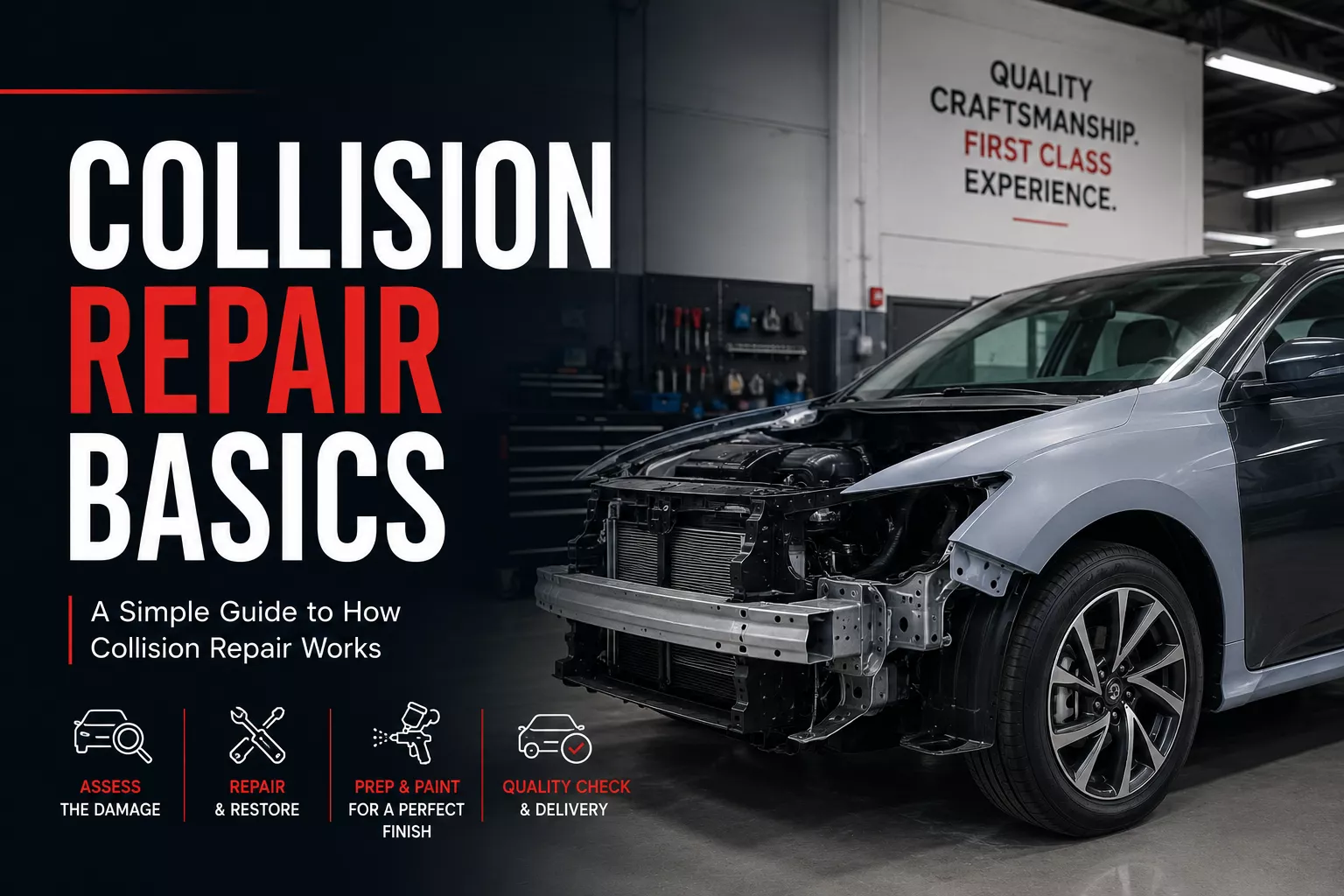
Collision repair is the process of restoring a vehicle to its pre-accident condition — structurally, mechanically, and cosmetically — after a crash, fender bender, or other impact. It can mean anything from smoothing out a single dent to straightening a bent frame, replacing panels, color-matching paint, and recalibrating the safety systems that protect you in the event of the next collision. This guide walks through what collision repair actually involves, the typical steps from estimate to pickup, and what you can reasonably expect along the way.
Whether you’ve just been in an accident or you’re trying to understand a shop’s estimate, the goal here is to make the process clear so you can make informed decisions. First Class Collision has been handling these repairs for drivers across Westbury, Nassau County, and Suffolk County, and the explanations below reflect how the work is really done.
What is collision repair?
Collision repair is the repair of damage caused by a vehicle impact, covering structural (frame), mechanical, and cosmetic (body and paint) work so the car is safe to drive and looks the way it did before the accident.
It’s broader than “bodywork.” A modern vehicle is engineered to absorb and direct crash energy in a specific way, so a proper collision repair restores not just the appearance but the underlying structure and the safety systems — airbags, sensors, and driver-assist cameras — that depend on everything being back in factory alignment. That’s why a quality repair starts with a thorough inspection rather than just a fresh coat of paint.
What does collision repair involve?
A typical collision repair involves an estimate, insurance approval, disassembly, structural and body repairs, refinishing, reassembly, and a final quality inspection before the car is returned.
Each of those stages has its own timeline, paperwork, and points where things can change — most notably the supplement that gets filed when teardown reveals damage the initial estimate missed. We break all eight down in our guide to the step-by-step collision repair process.
How long does collision repair take?
Most collision repairs take from a few days to a few weeks: light cosmetic work in one to three days, moderate panel damage in one to two weeks, and major structural repairs in three weeks or more.
The timeline depends on the severity of the damage, parts availability, and how quickly insurance approves the estimate. For a full breakdown by repair type and the factors that speed things up or slow them down, see our guide on how long collision repair takes.
Do I actually need collision repair?
You likely need collision repair if your vehicle has visible body damage, was in a moderate-to-severe impact, or shows warning signs like fluid leaks, pulling alignment, or doors and panels that no longer close properly.
Some damage is obvious, but structural and safety-related problems aren’t always visible from the outside. If you’re not sure whether your car needs professional attention, our guide on how to know if your car needs collision repair covers the warning signs to watch for. When the damage involves the frame or structure, the work is more involved — our overview of frame and structural repairs explains what’s at stake.
What should I expect from a quality repair?
A quality collision repair restores the vehicle to factory safety standards, matches paint and panel fit precisely, recalibrates safety systems, and comes with a clear warranty — not just a clean-looking surface.
It’s easy to judge a repair by how shiny it looks at pickup, but the parts you can’t see matter just as much. Knowing what separates careful work from a rushed job helps you choose the right shop and avoid problems down the road — our guide to the signs of quality collision repair walks through what to look for, and our list of common mistakes to avoid after a collision helps you steer clear of the most costly missteps.
How does insurance fit into collision repair?
In most cases, insurance pays for collision repair after a covered accident, but work can’t begin until the insurer approves the estimate, and supplements for hidden damage need separate approval.
A shop that works directly with insurers handles the paperwork and communicates with the adjuster on your behalf, which keeps the repair moving. First Class Collision works with insurance companies across Nassau County and Suffolk County, so you’re not stuck managing the back-and-forth yourself.
Explore our Collision Repair Basics guide
This pillar is the starting point for our Collision Repair Basics series. Dive deeper into any of these topics:
- How to Know If Your Car Needs Collision Repair
- Step-by-Step Collision Repair Process
- How Long Does Collision Repair Take?
- Understanding Frame and Structural Repairs
- Signs of Quality Collision Repair
- Common Mistakes to Avoid After a Collision
Frequently asked questions
What is the difference between collision repair and auto body repair?
The terms overlap, but collision repair specifically addresses damage from an accident or impact — including structural and safety system repair — while “auto body repair” is a broader term that can also cover cosmetic fixes unrelated to a crash, such as rust or door dings. A collision repair shop handles both, with the expertise to restore a vehicle to factory safety standards after an impact.
Is my car safe to drive after collision repair?
A properly completed collision repair restores the vehicle to safe, factory condition, including frame alignment and recalibrated safety systems. A reputable shop performs a final quality inspection before returning the car and stands behind the work with a warranty. If anything feels off after pickup, return to the shop right away.
Will collision repair affect my car’s value?
A high-quality repair using proper parts and procedures minimizes any impact on resale value, while a poor repair can hurt it. Repairs become part of the vehicle’s history, so quality work and good documentation matter. Using correct parts and restoring the car to factory specifications is the best way to protect its long-term value.
Do I have to use the repair shop my insurance recommends?
No. You have the right to choose your own collision repair shop regardless of which shops your insurer suggests. Insurers may recommend “preferred” shops, but the decision is yours, and a shop that works directly with your insurance company can manage the claim just as smoothly.
Have damage you want looked at? Contact First Class Collision in Westbury for a free estimate, or learn more about our frame and structural repair services.
3 Comments
Comments are closed.