
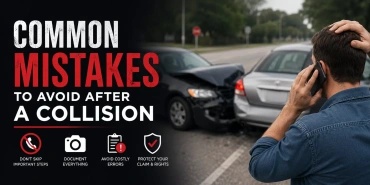
After a collision, the steps you take in the first hours and days can affect your safety, your insurance claim, and the quality of your repair. The most common mistakes are simple ones: not documenting the scene, mishandling the insurance claim, skipping a professional inspection, and choosing a repair shop on price alone. Knowing what to avoid helps you protect yourself and get your vehicle back to pre-accident condition.
This article is part of our Collision Repair Basics guide.
Skipping documentation at the scene
Document everything you can at the scene before vehicles are moved or details are forgotten. Photos and notes are far easier to gather in the moment than to reconstruct later, and they support both your insurance claim and any later questions about the extent of the damage.
If it is safe to do so, capture a clear record of what happened. A few minutes of careful documentation can prevent disputes weeks down the road.
- Photograph all vehicles involved, from multiple angles and distances.
- Note the location, time, weather, and road conditions.
- Exchange names, contact details, license plates, and insurance information.
- Get contact information for any witnesses.
Admitting fault or saying too much
Avoid admitting fault or speculating about what happened, even casually. Fault is determined later based on evidence, police reports, and insurance review, and an offhand apology can be misread as an admission.
Stick to the facts when speaking with the other driver, police, and insurers. Describe what you observed without guessing at blame. Being polite and cooperative does not require you to accept responsibility you may not actually hold.
Not reporting the claim properly
Report the accident to your insurer promptly and accurately, even for what looks like minor damage. Many policies require timely notice, and delaying or downplaying the incident can complicate your claim.
When you file, give a clear, factual account and provide the documentation you gathered. Ask your insurer about your coverage, your deductible, and your options for repair before you commit to anything, so you understand the process from the start.
Ignoring hidden damage and skipping an inspection
Always have your vehicle inspected by a professional, because collision damage is often hidden beneath body panels. A bumper that looks intact can conceal a bent frame, damaged sensors, or compromised crumple zones that affect how the vehicle protects you in a future accident.
A trained estimator can identify problems that are not visible at a glance, including structural issues that call for frame repair. If you are unsure whether your car needs work, our guide on how to know if your car needs collision repair walks through the warning signs to watch for.
Delaying repairs or driving an unsafe vehicle
Do not put off repairs or keep driving a vehicle that may be unsafe. Damage that seems cosmetic can hide problems with structural integrity, steering, or safety systems, and continuing to drive can make matters worse and put you at risk.
If there is any doubt about whether your car is safe to drive, have it towed and inspected rather than risking the road. Addressing damage sooner also keeps a straightforward repair from turning into a larger one.
Assuming you must use the insurer’s preferred shop
You generally have the right to choose your own repair shop, regardless of which shops your insurer suggests. Insurers often recommend shops in their network, but the decision about where your vehicle is repaired is usually yours to make.
Choose a shop you trust and that communicates clearly about the work your vehicle needs. A good shop will work with your insurer on your behalf and explain the repair plan so you understand what is being done and why.
Choosing a shop on price alone
Avoid selecting a repair shop based only on the lowest estimate. The cheapest quote can reflect lower-quality parts, skipped steps, or repairs that do not fully restore your vehicle, and that can cost you more in safety and resale value later.
Look instead at the shop’s reputation, its experience with your type of vehicle, and the quality of its work. Our guide to the signs of quality collision repair can help you evaluate a shop before you hand over your keys. Professional collision repair is an investment in your safety, not just your vehicle’s appearance.
Not getting the repair and warranty in writing
Get the repair plan, the parts being used, and any warranty in writing before work begins. A written estimate and warranty protect you and set clear expectations about what will be done and what is covered.
Ask whether the shop uses original equipment or aftermarket parts, how long the repair will take, and what the warranty covers. A reputable shop will answer these questions plainly and put the important details in writing without hesitation.
Frequently asked questions
Should I report a minor accident to my insurance company?
Yes, it is generally best to report any accident to your insurer, even a minor one. Hidden damage may surface later, and many policies require timely notice, so reporting promptly protects your ability to file a claim.
Can I choose my own collision repair shop?
In most cases, yes, the choice of repair shop is yours. Your insurer may recommend shops in its network, but you generally have the right to take your vehicle to a shop you trust.
Why does my car need an inspection if the damage looks minor?
Because collision damage is frequently hidden beneath body panels and bumpers. A professional inspection can reveal structural, mechanical, or safety system damage that is not visible from the outside.
Is it safe to drive my car after a collision?
Not always, even if it looks drivable. Damage can affect steering, structural integrity, or safety systems, so if there is any doubt, have the vehicle inspected before driving it.
If you have been in an accident in Westbury or anywhere on Long Island, the team at First Class Collision can inspect your vehicle and guide you through the repair process. Call us at +1-516-433-4448 or learn more about our collision repair services in Westbury, NY.