

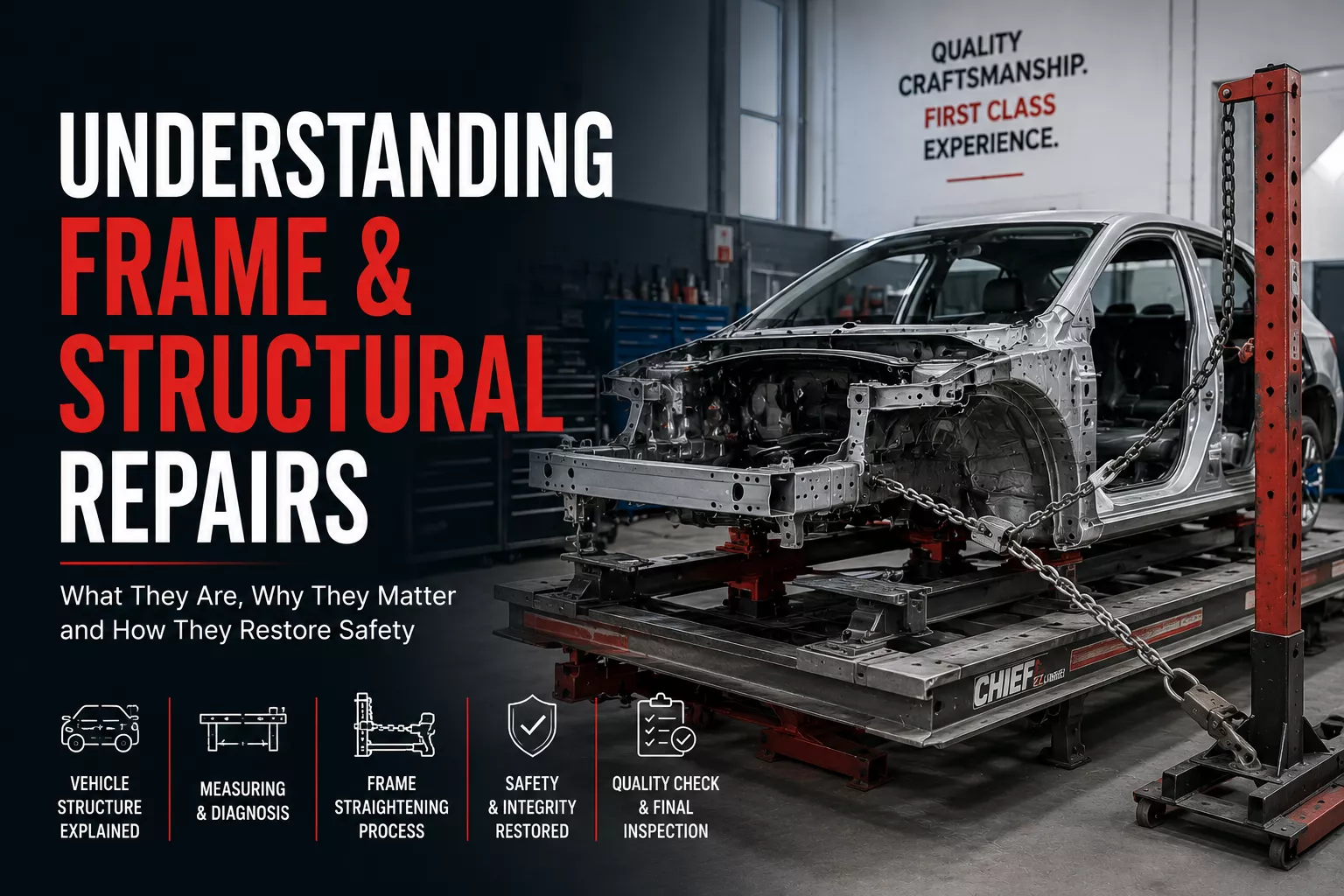
Frame and structural repair is the process of restoring a vehicle’s load-bearing structure to its original dimensions as built by the manufacturer. After a serious collision, the frame or unibody can bend, twist, or shift in ways you cannot see by eye, which affects how the car drives and how it protects you in another crash. Getting this work right requires precise measuring equipment, trained technicians, and patience, which is why it should never be a do-it-yourself or rushed job.
This article is part of our Collision Repair Basics guide.
What is the frame and how does it differ from a unibody?
The frame is the underlying skeleton that everything else on your vehicle is built around, and modern cars use one of two main approaches to it. Older trucks, large SUVs, and some heavy-duty vehicles use a body-on-frame design, where the body sits on top of a separate steel ladder frame. Most passenger cars and crossovers today use a unibody, where the frame and body panels are engineered as a single welded structure.
The distinction matters during repair. On a body-on-frame vehicle, the frame and body can sometimes be addressed more separately. On a unibody, the entire shell works together to absorb impact, so damage in one area can affect the integrity of the whole structure. Either way, the goal is the same: return the vehicle to factory specifications.
How does structural damage happen, and why is it dangerous?
Structural damage occurs when a collision transfers more force to the vehicle than its cosmetic panels can absorb, pushing that energy into the load-bearing frame or unibody. Even a crash that looks moderate from the outside can shift the structure out of alignment, because modern vehicles are designed with crumple zones that intentionally deform to protect occupants.
The danger is that a compromised structure no longer behaves the way it was engineered to in a future accident. Crumple zones may not collapse properly, airbags and seat belts may not perform as intended, and the cabin may not hold its shape. Hidden structural damage can also cause uneven tire wear, pulling, and handling problems day-to-day. If you are unsure whether your vehicle has this kind of damage, our guide on how to know if your car needs collision repair can help you decide when to have it inspected.
How do shops detect structural damage?
Reputable shops detect structural damage with computerized measuring systems rather than relying on the eye alone, because the human eye cannot reliably catch small dimensional shifts. The vehicle is placed on a frame machine or bench, and a measuring system compares dozens of reference points on the car against the manufacturer’s original specifications.
This measuring step is one of the clearest markers of a quality shop. Common tools and checks include:
- Computerized measuring systems that map the vehicle in three dimensions
- Manufacturer specification databases are used as the target for every reference point
- Frame machines and benches that hold the vehicle securely during measurement and pulling
- Before-and-after measurements that document the structure were returned to spec
You can learn more about what separates a careful repair from a shortcut in our overview of the signs of quality collision repair.
How is frame and structural damage actually repaired?
Frame and structural repair restore the damaged structure to factory dimensions through controlled pulling, sectioning, and component replacement. With the vehicle anchored to a frame machine, technicians apply measured force to pull bent sections back into position, continuously checking measurements until every reference point matches specification.
Some damage cannot simply be pulled. In those cases, technicians may section a structural part, removing the damaged area and welding in a new section at manufacturer-approved locations, or replace an entire structural component such as a rail or pillar. This work follows specific procedures for each vehicle, including the correct welding methods and joint locations. You can see how this fits into the larger process on our frame repair and collision repair service pages.
Why does recalibration of safety systems matter?
Recalibration matters because today’s vehicles rely on cameras, radar, and sensors that must be precisely aimed to work, and structural repairs can disturb them. Features like automatic emergency braking, lane-keeping assistance, blind-spot monitoring, and adaptive cruise control depend on these sensors accurately reading the road.
When a vehicle’s structure, bumpers, windshield, or mounting points are repaired or replaced, those systems often need to be recalibrated to the manufacturer’s procedure. Skipping this step can leave advanced safety features pointing in the wrong direction or operating on incorrect data, undermining the very systems designed to keep you safe.
Why should a framework never be DIY or rushed?
Frame and structural work should never be a do-it-yourself project because it requires specialized equipment, manufacturer data, and trained judgment that a home garage simply cannot replicate. A frame that looks straight but sits even slightly out of specification can compromise crash protection and create handling problems that are difficult to trace later.
Rushing the work is just as risky, since accurate measuring, careful pulling, approved welding, and proper recalibration all take time. When this repair is done the first time correctly, you get a vehicle that drives the way it should and protects you the way it was engineered to.
Frequently asked questions
Can a car with frame damage be safely repaired?
Yes, many vehicles with frame or structural damage can be safely repaired when the work is done to the manufacturer’s specifications. The structure is measured, pulled, or replaced as needed and verified against factory dimensions, and in some severe cases, an insurer may instead declare the vehicle a total loss.
How do I know if my car has structural damage?
You may suspect structural damage if the vehicle pulls to one side, the doors or hood no longer line up, tires wear unevenly, or it was in a significant collision. The only reliable way to confirm it is a measured inspection at a qualified shop using a computerized measuring system.
Does structural repair affect my vehicle’s safety systems?
Often, yes. Structural repair can disturb the cameras, radar, and sensors that power driver-assistance features, so those systems often require recalibration per the manufacturer’s procedure to remain functional after the repair is complete.
How long does frame and structural repair take?
The time depends on the extent of the damage, parts availability, and the calibration steps required, so it varies from vehicle to vehicle. Quality structural work is not rushed, and an honest shop will give you a timeline after inspecting and measuring the car.
If your vehicle was in a collision and you are concerned about hidden frame or structural damage, the team at First Class Collision in Westbury, NY, can measure and inspect it for you. Call us at +1-516-433-4448 or visit our frame repair page to schedule service for Westbury, Nassau County, Suffolk County, and Long Island.

1 Comment
Comments are closed.