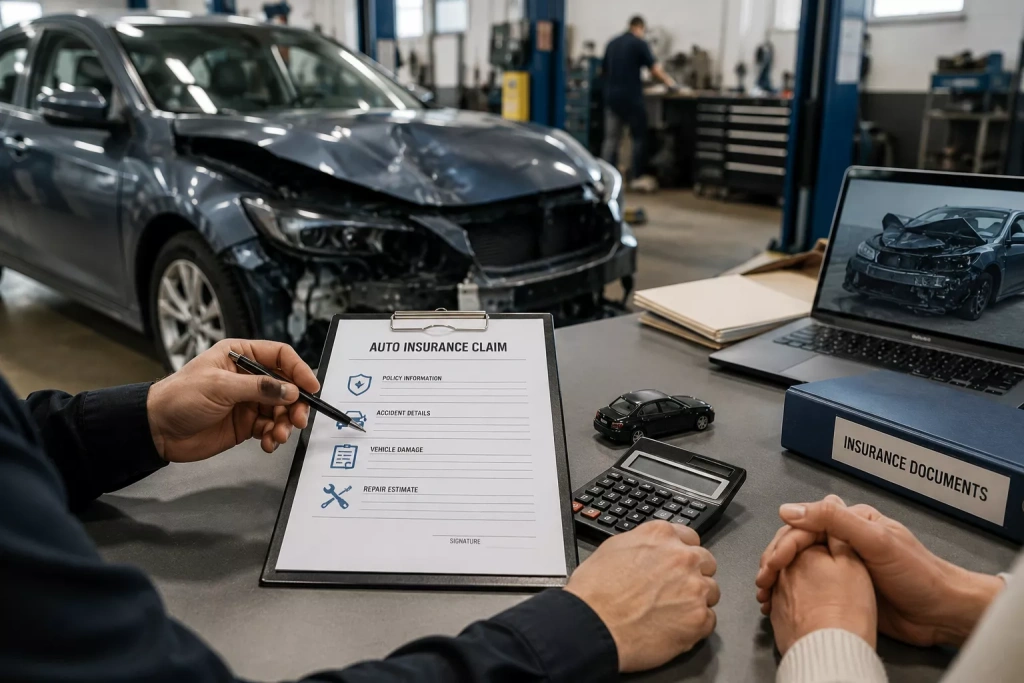
Filing auto insurance claims after a collision can be a daunting, highly stressful experience, particularly when you are trying to recover from the physical and emotional shock of an accident. On Long Island, from the busy lanes of the LIE (Long Island Expressway) and the Northern State Parkway to the local roads of Westbury and Nassau County, navigating the complex web of insurance policies, state laws, and repair estimates requires a clear, step-by-step strategy. In New York State, you have specific legal rights that protect you from being pressured by insurance adjusters, including the absolute right to choose your own collision repair shop.
Understanding how to proceed after a vehicle accident can mean the difference between a complete, safe restoration and a compromised vehicle that fails to protect you in a subsequent crash. This comprehensive guide serves as your Long Island handbook, taking you from the immediate scene of the accident through the intricate technicalities of New York insurance law, part selection disputes, and the technical steps of factory-certified collision repair.
First Steps at the Scene
Your actions in the minutes after a crash lay the groundwork for your insurance claim. Move your vehicle to a safe spot and turn on your hazards; call 911; and report any injury or property damage over $1,000 — required under New York law. Exchange driver, license, and insurance details with everyone involved, note any witnesses, and photograph the vehicles, their positions, skid marks, and road conditions. If your car isn’t drivable near Westbury, have it towed straight to a certified shop like First Class Collision.
For the complete, step-by-step scene checklist — including exactly how to request your police accident report (MV-104A) — see our companion guide: What to Do After a Car Accident: A Long Island Driver’s Step-by-Step Guide. Once you are safe and the scene is documented, your focus shifts to the insurance claim itself.
Understanding New York State Insurance Laws and Your Rights
New York operates under a “No-Fault” insurance system, which significantly affects how medical bills and certain financial losses are handled after an accident. This system is designed to expedite medical care but is often misunderstood.
Under New York’s No-Fault law, your own insurance company is responsible for paying your medical expenses, lost wages, and other essential, out-of-pocket costs resulting from injuries sustained in the collision, regardless of who was at fault for the accident. This coverage, officially known as Personal Injury Protection (PIP), applies to the driver, passengers, and pedestrians struck by the vehicle. It is crucial to file your PIP claim within 30 days of the accident to avoid losing these benefits.
However, No-Fault insurance does not cover property damage to your vehicle. Claims for vehicle damage are handled through either your collision coverage (if you carry it) or through the at-fault driver’s liability insurance. When pursuing property damage claims, New York State law provides you with several vital protections that many insurance companies may attempt to gloss over.
New York State Insurance Regulation 64
New York State Regulation 64 is a consumer protection standard that governs how insurance companies must handle auto claims. It establishes strict guidelines to prevent insurers from engaging in unfair claim settlement practices. Under Regulation 64, insurance companies are required to:
- Acknowledge receipt of a claim within 15 working days.
- Conduct a reasonable investigation into the accident.
- Provide a detailed, written explanation of any claim denial.
- Offer fair settlements that reflect the actual cost of restoring the vehicle to its pre-accident state.
If an insurer drags its feet or attempts to settle a claim for an unreasonably low amount, it may be in violation of Regulation 64, exposing it to regulatory action by the New York State Department of Financial Services (DFS).
The Right to Choose Your Own Repair Shop
One of the most important legal rights you have under New York State Insurance Law Section 2610 is the absolute right to choose where your vehicle is repaired. Your insurance company cannot require you to have your vehicle repaired at a specific shop, nor can it influence or dictate your choice.
While insurance adjusters may recommend or “strongly suggest” their own direct repair program (DRP) shops, often claiming it will speed up the claim or guarantee the work, you are under no obligation to use them. DRP shops often have contracts with insurance providers to keep repair costs as low as possible, which can sometimes lead to the use of alternative, non-OEM parts or rushed repair processes. Selecting an independent, certified collision repair center like First Class Collision in Westbury ensures that your vehicle is restored according to manufacturer-approved safety and quality standards, rather than the budget constraints of an insurance company.
Step-by-Step Guide to Filing Your Insurance Claim
Once you are safe and your vehicle has been transported to a secure location, you should initiate the claims process as soon as possible.
Step 1: Contact Your Insurance Provider
Notify your insurance company about the collision as soon as it is safe to do so. Most insurers require prompt notification, often within 24 to 48 hours of the incident. When you call, provide the basic facts of the accident, the police report number, and the insurance details of the other parties involved. Avoid admitting fault or speculating about the cause of the collision during this initial call, as the final determination will rely on the official police investigation and physical evidence.
Step 2: Choose Your Certified Repair Facility
Instruct your insurance company that you are exercising your right under NY State law to have your vehicle repaired at First Class Collision in Westbury, Long Island. Provide the insurer with the shop’s contact information and address so their adjuster can coordinate with the facility.
Step 3: The Adjuster’s Inspection
An insurance adjuster will need to inspect your vehicle to estimate the cost of repairs. The inspection can take place directly at First Class Collision. Having a certified technician from the repair facility present during the adjuster’s inspection is highly beneficial. It ensures that all structural, mechanical, and safety-related damage is identified and accounted for in the initial estimate.
Step 4: Reviewing the Estimate and Addressing Supplements
It is very common for the initial insurance estimate to be lower than the actual cost of repairs. This is because adjusters can only document visible, external damage during their initial inspection. Once the technicians at First Class Collision disassemble the vehicle, they will often find hidden, internal structural damage. When this occurs, the shop will file a “supplemental claim” with your insurance provider, submitting photos and documentation of the additional damage to secure approval for the extra repair costs.
Filing Your Claim Paperwork the Right Way
When managing your vehicle’s recovery after an accident, it is equally important to know the precise steps for properly filing the paperwork. For a comprehensive, step-by-step breakdown of the paperwork and procedure, read our guide on how to file an auto insurance claim after an accident.
OEM vs. Aftermarket Parts: What You Need to Know
During the claim negotiation, a major point of contention between you, your repair shop, and the insurance company will often be the choice of replacement parts.
OEM (Original Equipment Manufacturer) Parts are made directly by your vehicle’s manufacturer and are identical to the parts originally installed on your car. They are designed to fit perfectly, maintain structural integrity, and preserve the manufacturer’s safety ratings and crash-test performance.
Aftermarket Parts are made by third-party manufacturers. While they are often cheaper than OEM parts, their quality, fit, and durability can vary significantly. Insurance companies frequently write estimates based on aftermarket or salvaged parts to save money.
At First Class Collision, our technicians prioritize the use of certified OEM parts to restore your vehicle to its pre-accident condition. This is especially critical for structural components, crumple zones, and advanced driver assistance systems (ADAS) sensors, where aftermarket alternatives may compromise the vehicle’s safety in a subsequent collision. We work diligently with insurance companies to advocate for the use of OEM parts on your behalf.
The Problem with Salvage and Reconditioned Parts
In addition to aftermarket parts, insurance estimates may suggest the use of “salvaged” or “reconditioned” parts sourced from junkyards. While these are technically original parts, their history is completely unknown. A salvaged structural pillar may have been exposed to high stress, rust, or weak welds in a prior accident, compromising its ability to protect passengers in a future crash. Only certified, brand-new OEM parts offer the safety assurance your vehicle was designed to provide.
The Technical Restoration Process: What Happens Behind the Scenes
At First Class Collision, our certified collision repair process is split into several distinct, computerized phases to guarantee factory-level precision:
1. Advanced Structural Alignment (Frame Measuring)
When a vehicle suffers a severe impact, the frame or unibody structure can be bent out of alignment by as little as a millimeter. Standard visual checks cannot detect this. Our facility utilizes computerized 3D laser measuring systems that compare your vehicle’s current frame dimensions to the manufacturer’s original blueprint. Technicians use heavy-duty frame pulling machines to hydraulically pull the metal back into alignment with millimeter precision, restoring the structural integrity of your vehicle’s safety cage.
2. Digital Color-Matching and Refinishing
Achieving a seamless paint finish requires advanced technology. Automotive paint fades over time due to UV exposure, meaning standard factory paint codes will not match your car’s current shade. Our paint department utilizes digital spectrophotometers to analyze the light reflection of your vehicle’s paint, generating a customized formula. This formula is mixed in a computerized mixing station and applied in a downdraft spray booth, baking the finish to a durable, factory-grade gloss.
3. ADAS Calibration (Safety Sensors)
Modern vehicles are packed with advanced safety tech, including lane-departure warnings, blind-spot monitoring, and automatic emergency braking. These systems rely on cameras and radar sensors positioned behind the bumpers and windshield. If your vehicle is in an accident, these sensors must be recalibrated after the body panels are repaired. We perform static and dynamic ADAS calibrations to ensure your vehicle’s safety systems interact properly and function exactly when needed on Long Island roads.
Common Insurance Claims Pitfalls to Avoid
Avoiding these common mistakes can prevent delays and ensure you receive the full settlement you are entitled to:
- Failing to File a Police Report: Never agree to “settle things privately” without a police report, as the other driver may later change their story or deny involvement.
- Signing Releases Too Quickly: Do not sign any settlement releases or accept quick payment offers from the at-fault driver’s insurance company until your vehicle has been fully inspected by a certified technician and your medical condition has been thoroughly evaluated.
- Delaying Medical Treatment: Even if you feel fine immediately after the collision, adrenaline can mask injuries. Visit a doctor to document any physical impact, as delaying treatment can complicate your No-Fault PIP claim.
- Allowing the Insurer to “Steer” You: Remember, Section 2610 of the New York State Insurance Law protects your right to choose your repair shop. Stand firm and select a certified facility that works for you, not the insurance company.
Frequently Asked Questions (FAQs)
Can my insurance company deny my claim if I choose my own repair shop?
No, New York State law strictly prohibits insurance companies from denying or delaying a claim based on your choice of repair shop. Under Insurance Law Section 2610, you have the absolute right to select any repair facility you prefer, and the insurer must process your claim in a timely and fair manner.
What is an insurance deductible and how does it work?
Your deductible is the out-of-pocket amount you agree to pay toward repairs before your insurance coverage kicks in. For example, if your repair cost is $3,500 and your deductible is $500, you will pay $500 to the repair shop, and your insurance company will pay the remaining $3,000. If you are not at fault for the accident, your insurer may seek subrogation to recover your deductible from the at-fault party’s insurance.
What is a “total loss” and how is it determined?
A vehicle is considered a “total loss” in New York if the cost of repairs plus the salvage value of the vehicle exceeds the vehicle’s actual cash value (ACV), or if the repair cost reaches a specific percentage of the ACV (usually around 75% to 80%). If your vehicle is declared a total loss, the insurance company will pay you the actual cash value of the car minus any applicable deductible.
What is a supplemental claim in collision repair?
A supplement is an additional claim submitted by the repair shop to the insurance company for damage that was not visible during the initial estimate. This typically occurs after the vehicle is disassembled and internal, structural, or mechanical damage is discovered. The repair shop works directly with the insurance company to secure approval for these necessary additional repairs.
How long do I have to file an auto insurance claim in New York?
In New York, you must file a No-Fault (PIP) claim within 30 days of the accident to cover medical bills and lost wages. For property damage claims, you should notify your insurer immediately, but New York’s statute of limitations generally allows up to three years from the date of the accident to file a lawsuit for property damage. However, waiting too long can make it difficult to gather evidence and process the claim.
Are certified collision centers different from standard body shops?
Yes, certified collision centers like First Class Collision have undergone specialized training and rigorous audits by vehicle manufacturers to ensure they possess the proper equipment, skills, and safety protocols to repair vehicles according to original factory specifications. This certification guarantees a higher standard of safety and quality than a standard, non-certified body shop.
What is subrogation in auto insurance?
Subrogation is the legal process by which your insurance company, after paying for your repairs, pursues the at-fault driver’s insurance company to recover the costs. If subrogation is successful, your insurance company will refund your out-of-pocket deductible payment.
What should I do if my insurance company disagrees with the repair shop’s estimate?
If there is a disagreement, the insurance company and the repair shop will negotiate to reach a fair agreement on the required repairs. In rare cases where an agreement cannot be reached, New York law allows you to utilize an appraisal process or file an official complaint with the New York State Department of Financial Services (DFS).
Can an insurance company force me to use aftermarket parts?
No. While New York law allows insurers to base their estimates on high-quality aftermarket parts, you can insist on OEM parts. If your policy has an OEM endorsement, the insurer must pay for original parts. In other cases, certified shops like First Class Collision can often negotiate with the insurer or match pricing to ensure OEM parts are utilized.
First Class Collision: Your Certified Partner in Westbury, Long Island
Located in Westbury, NY, First Class Collision is a premier certified collision repair center serving Long Island and Nassau County. We specialize in restoring vehicles to their original factory safety and aesthetic standards. Our expert team handles the entire insurance claims process for you—from coordinating with the adjuster and managing supplemental claims to securing OEM replacement parts. We work on your behalf to ensure that your insurance company fulfills its obligations and that your car is returned to you in safe, pristine condition.
If you have recently been in an accident on Long Island, contact us today to schedule a certified inspection and protect your rights throughout your insurance claim journey.